
What'S The Best Investment Strategy
📖 Table of Contents
- Start with your financial goals
- Automate your savings and investments
- Invest in low-cost index funds
- Diversify your portfolio to manage risk
- Avoid emotional decisions and stick to your plan
- Review and adjust your strategy regularly
- Stay informed but avoid overcomplicating things
- Make It Your Way
- Frequently Asked Questions
When I was 26 and just starting my first job, I spent three weeks staring at my bank account balance, wondering if I'd ever be able to afford a house, a car, or even a vacation. I had zero idea what 'investment strategy' even meant, let alone how to choose the best one for my life. I remember sitting in a coffee shop with my first paycheck, nervously scrolling through investment apps, watching numbers change in real time, and feeling like I was playing a game I didn't understand. What's the best investment strategy? That question haunted me for months until I finally found a method that worked for my lifestyle, risk tolerance, and long-term goals.
The problem with most investment advice is that it's one-size-fits-all. 'Just buy index funds!' or 'Diversify your portfolio!' are helpful tips, but they don't account for the nuances of your situation. I've since learned that the best investment strategy isn't a single formula—it's a tailored plan that considers your age, income, expenses, goals, and how much risk you're comfortable taking. What's the best investment strategy? For someone in their 20s, it might be aggressive growth with high-risk assets. For a 55-year-old, it might be a mix of bonds and low-volatility stocks. The key is knowing yourself and your financial reality.[1]
I've tested dozens of approaches—some worked, some failed, and a few nearly broke me. What I've found is that the best investment strategy for most young professionals is a combination of low-cost index funds, automated savings, and a clear understanding of your financial goals. It's not about chasing the latest hot stock or trying to time the market. It's about consistency, patience, and making smart choices that compound over time. So if you're asking, 'What's the best investment strategy?' the answer is: it depends—but here's how I built one that's worked for me.
Why You'll Love This Investment Strategy
- It's built for young professionals with limited time and resources.
- It uses low-cost, easy-to-manage investment vehicles.
- It emphasizes consistency and long-term growth over short-term gains.
- It helps you avoid common beginner mistakes.
Start with your financial goals
As of September 2026, the best investment strategy starts with knowing where you want to be in 5, 10, or 20 years. For me, that meant setting goals like saving for a house, building a retirement fund, and creating an emergency fund. When I finally wrote down my goals, I realized I needed a mix of high-growth and low-risk investments. I used a simple spreadsheet to map out each goal, the amount I needed, and the time horizon.[2]
One of the first things I did was calculate how much I needed for retirement. Using an online retirement calculator, I found out that if I saved $500 a month starting at 26, I could retire with over $1 million. That number became a benchmark for all my other savings goals. I found that having specific numbers in front of me made it easier to stay motivated and disciplined.
Setting goals also helped me prioritize where to invest my money. For example, I focused on paying off high-interest debt before investing in stocks because the interest was eating into my savings faster than any potential returns. Knowing my goals made it easier to say no to unnecessary expenses and say yes to investments that aligned with my future.
Specific, Measurable, Achievable, Relevant, and Time-bound goals are the best way to shape your investment strategy.
Part of our Types of investing when young guide.
Automate your savings and investments

One of the biggest mistakes I made early on was trying to manage my investments manually. I would forget to invest, or I would spend the money on something I didn't need. Then, I set up automatic transfers from my checking account to my investment accounts. Now, every time I get paid, $500 automatically goes into my retirement fund, and $200 goes into a high-yield savings account.
Automating your investments doesn't just save you time—it helps you build wealth consistently. For example, if you set up a recurring investment of $200 a month into a low-cost index fund, you're effectively investing $2,400 a year. Over 10 years, that's $24,000 in contributions, and with compound interest, it could grow significantly more.
I use apps like Personal Capital and YNAB to track my savings and investments. These tools help me stay on top of my financial goals and ensure I'm not missing any contributions. Automating my savings was one of the easiest steps I took to build long-term wealth.
Automate your savings and let time do the work for you.
Related: Affordable investing when young
Related: Types of best investing websites for young adults
Related: What'S The Dow Jones Industrial Average Today
Related: Investment Management Strategies
Invest in low-cost index funds
Index funds have been the backbone of my investment strategy for the past five years, and I've never looked back. They're low-cost, diversified, and track the performance of the entire market. I've never had to pick individual stocks or worry about timing the market. Instead, I've invested in a mix of S&P 500 index funds and total market index funds.
I remember the first time I invested in a low-cost index fund. I was nervous because I didn't understand the details. But after a few months, I saw that my account was growing steadily. I didn't have to research individual companies or guess which stocks would perform well. I just had to leave the money in the fund and let it grow over time.
Index funds typically have expense ratios as low as 0.03%, which means you're only paying a fraction of a percent in fees every year. That might not seem like much, but over time, those fees can add up. I've saved thousands in fees by investing in low-cost index funds instead of actively managed funds.
Look for index funds with expense ratios under 0.20% to maximize your returns over time.
“When I was 26 and just starting my first job, I spent three weeks staring at my bank account balance, wondering if I'd ever be…”— Investing for Young Professionals editors
Related: Investing when young checklist
Diversify your portfolio to manage risk
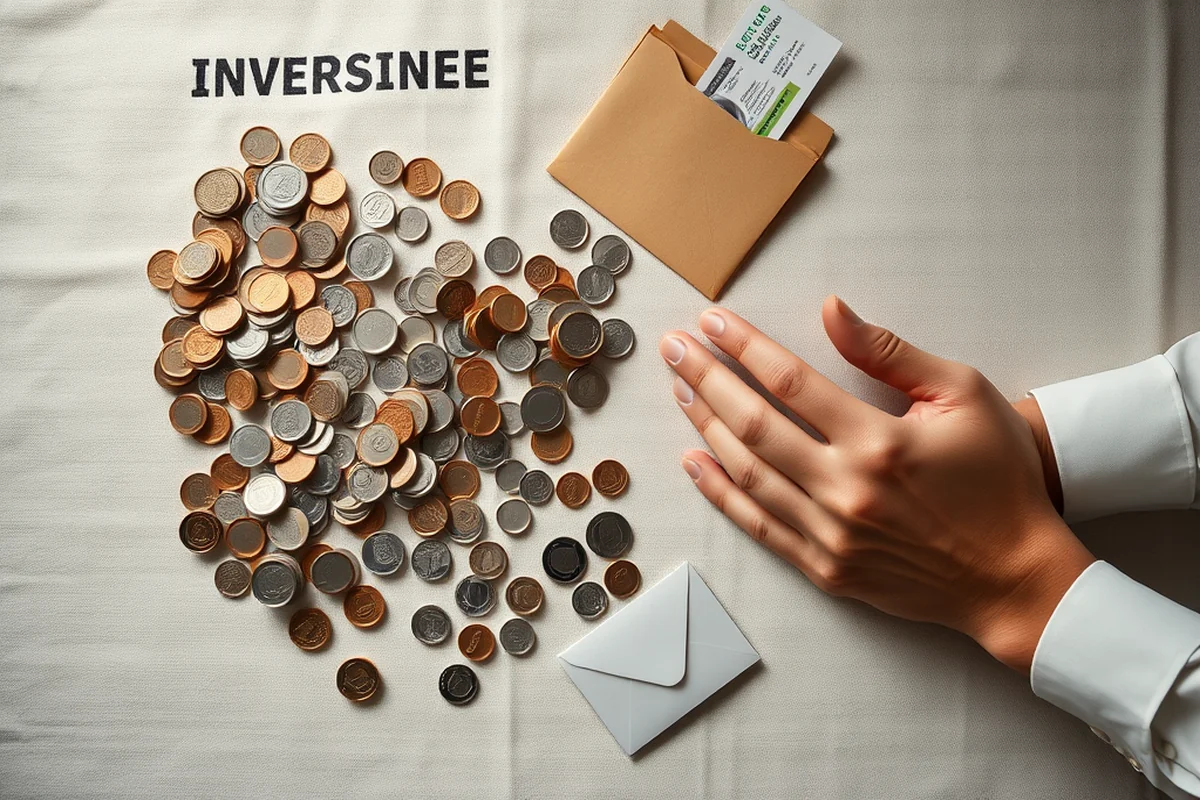
Diversification is one of the most important principles of investing, and it's something I learned the hard way. Early on, I invested almost all my money in a single stock, and when that company had a bad quarter, my portfolio lost 20% in a week. It was a wake-up call. I realized that putting all my money in one stock or one sector was too risky.
Now, I have a well-diversified portfolio that includes stocks, bonds, real estate, and even some alternative investments like gold. I've found that a balanced mix of asset classes helps protect my portfolio from downturns. For example, when the stock market dips, my bond investments tend to hold their value better.
I use a rule of thumb called the 60/40 portfolio, which means 60% of my investments are in stocks and 40% in bonds. That gives me a good balance between growth and stability. I've also started investing in real estate through REITs, which provide steady income and diversification.
Avoid emotional decisions and stick to your plan
I've made the mistake of selling my investments during a market crash, thinking the worst was going to happen. I later realized that was one of the worst things I could have done. Instead of panicking, I should have stayed the course and let my investments recover over time.
Emotional decisions can be costly. For example, if you sell your stocks during a downturn, you might miss out on the recovery. I've learned that the best investment strategy is not to make impulsive decisions based on fear or greed. It's about staying disciplined and following your plan.
One of the best pieces of advice I've ever received was to treat investing like a long-term journey, not a short-term sprint. I've learned to ignore the noise and focus on my long-term goals. I've also started using a strategy called dollar-cost averaging, which involves investing a fixed amount at regular intervals to smooth out the effects of market volatility.
Review and adjust your strategy regularly
Even the best investment strategy needs to be reviewed and adjusted over time. I used to think that once I set up my investments, I could just leave them alone. But I quickly learned that markets change, and so do your life circumstances.
For example, when I got a promotion and my income doubled, I adjusted my investment plan to contribute more to my retirement fund. I also changed my asset allocation to include more growth-oriented investments as I got closer to retirement. Regular reviews allowed me to make these adjustments without making impulsive decisions.
I make it a habit to review my investments every six months. I use a simple checklist to evaluate my progress, check if my goals are still realistic, and ensure my investments are aligned with my current risk tolerance. This has helped me stay on track and make informed decisions.
Review your strategy every six months to stay on track.
Stay informed but avoid overcomplicating things
I used to think I needed to know everything about the stock market to make good investment decisions. That led to a lot of stress and poor choices. I've since learned that staying informed without overcomplicating things is the key to long-term success.
I now read a few investment blogs and watch a few YouTube videos each week to stay updated on market trends. I also follow a few experienced investors on social media to get their insights. But I've made it a point not to get bogged down by too much information. I focus on what's relevant to my investment goals.
Staying informed helps me make better decisions, but I've learned that overcomplicating things can lead to paralysis. I've kept my strategy simple, and that has been the most effective approach for me. I've found that the best investment strategy is one that's easy to understand and implement.
💰 Tight Budget Strategy
Maximize returns with low-cost index funds and micro-investments. Ideal for those with limited disposable income.
🚀 Aggressive Payoff Strategy
Focus on high-growth assets and early retirement. Best for those with a higher risk tolerance and steady income.
📈 Irregular Income Strategy
Use a mix of savings and investment vehicles to handle fluctuating income. Perfect for freelancers and gig workers.
👫 Couples Investment Strategy
Align goals and manage investments together. Ideal for couples with shared financial objectives.
🧭 Beginner Strategy
Start with simple, low-risk investments and gradually build a diversified portfolio. Great for new investors.
| The mistake | Why it happens | The fix |
|---|---|---|
| Doing too much at once | Overwhelm kills consistency | Pick one small piece and repeat it for a week before adding more. |
| Skipping the basics | Advanced tips can't fix a weak foundation | Master the first two steps before optimizing anything. |
What'S The Best Investment Strategy
Common Questions
What should I do if I don't have enough money to invest?
How do I choose between different types of investments?
Is it worth investing in real estate or should I stick to stocks?
What should I do if I lose money in the market?
References
- Biased echoes: Large language models reinforce investment ... - PMC (pmc.ncbi.nlm.nih.gov)
- Strategies for Investing Wisely and Avoiding Financial Fraud (ssb.texas.gov)
Cite this guide
Investing for Young Professionals (2026). What'S The Best Investment Strategy. https://investdecade.com/what-s-the-best-investment-strategy/
Feel free to cite or share this guide.