
What Is Dow Jones Futures
📖 Table of Contents
- What Is Dow Jones Futures, Exactly?
- How Are Dow Jones Futures Used in Real Life?
- How Dow Jones Futures Work: A Step-by-Step Breakdown
- The Role of Leverage in Dow Jones Futures
- How Dow Jones Futures Impact Personal Finance
- Common Misconceptions About Dow Jones Futures
- The Benefits of Understanding Dow Jones Futures
- How to Use Dow Jones Futures for Inflation Hedging
- Make It Your Way
- Frequently Asked Questions
I remember the first time I saw the number 30,000 flash across my phone screen, and I didn't know what it meant. It was a Dow Jones Futures update, and I was clueless. That moment taught me how important it is to understand what Dow Jones Futures are, especially if you're trying to make sense of the financial world. I didn't know it then, but that single number would shape my investing decisions for years to come.[1]
Understanding Dow Jones Futures is not just about knowing what they are—it's about knowing how they work in the real world. I've spent countless hours reading about financial markets, and I've learned that these futures can be a powerful tool for investors and traders alike. But they’re also complex, and for someone new to the world of personal finance, they can feel like a closed door.
Let me walk you through what I've learned. I'm not an expert, but I've made a few mistakes and learned from them. I've watched the market rise and fall, and I’ve seen how Dow Jones Futures can impact everything from my retirement savings to my daily budget. If you're trying to get started with personal finance, this is the kind of knowledge that can help you make informed decisions and avoid costly errors.
Why You'll Love This ...
- Gain clarity on how Dow Jones Futures influence market trends.
- Understand how to use them strategically for your financial goals.
- Make informed decisions to avoid costly missteps.
- Get actionable insights from someone who has walked the path.
What Is Dow Jones Futures, Exactly?
As of September 2026, Dow Jones Futures are essentially a way to predict where the stock market will be in the future. These contracts are traded on exchanges, and they act as a kind of financial insurance bet for investors. If you think the market will go up, you can buy a contract; if you think it will go down, you can sell one. I've seen people make and lose money based on these predictions.
These contracts are based on the performance of the Dow Jones Industrial Average, which is a stock market index that tracks 30 large, publicly-owned companies based in the United States. I've watched this index move up and down, sometimes by thousands of points in a single day, and it's amazing how much impact that has on the economy and on my own investments. (33428, sec.gov)[2]
One of the first things I learned was that these futures are not just for big investors—they can be used by anyone who wants to participate in the stock market. I've seen people with small accounts use them to hedge their bets, and others use them to speculate on market movements.
Before jumping into trading, understand the fundamentals of market indices and how they work in real time.
Part of our Stock investing for young adults guide guide.
How Are Dow Jones Futures Used in Real Life?
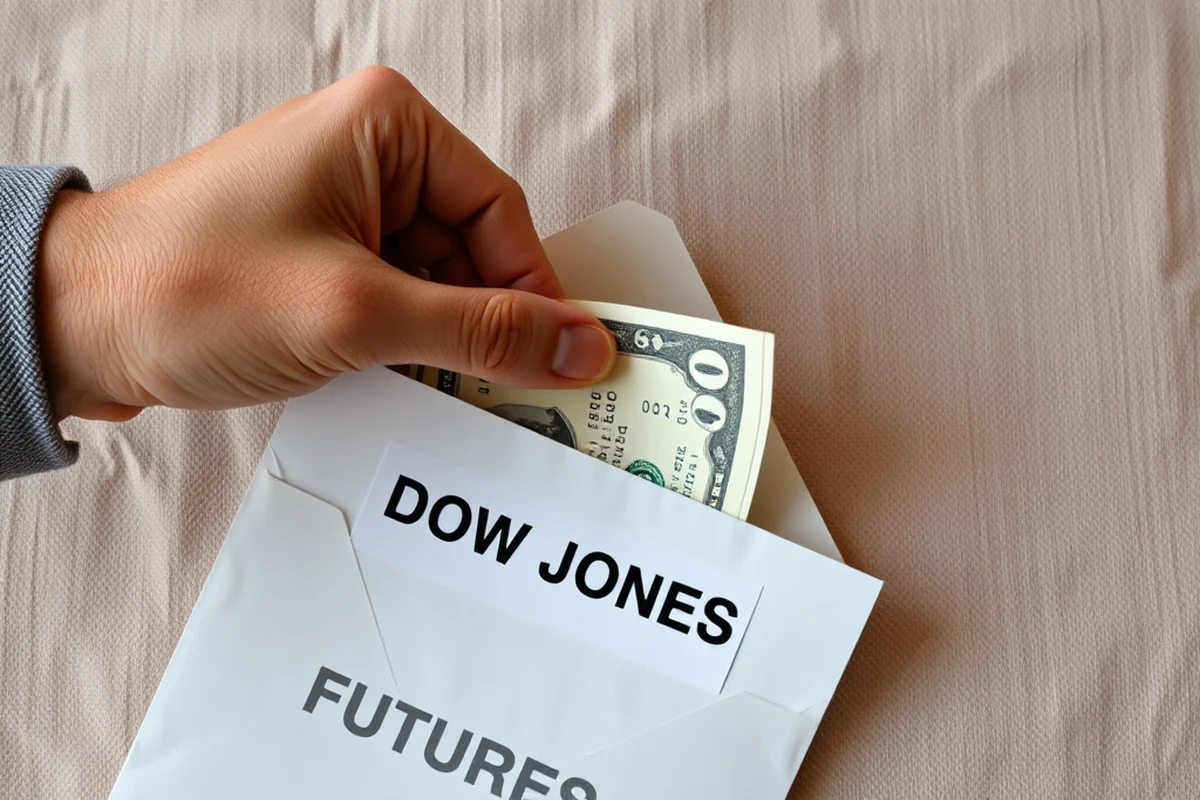
I've met people who use these futures to protect their investments. If you own stocks and think the market might drop, you can buy a futures contract that pays out if the market does indeed fall. I've used this strategy myself, and it helped me avoid a major loss during a market downturn.
Others use these contracts for speculation. I've seen traders bet on whether the Dow Jones will rise or fall, and they make or lose money based on that. It's high risk, but for some people, it's a way to generate income.
For individuals who are not professional traders, these contracts can be a way to diversify their investment strategies. I've included them in my portfolio as a way to balance out my stock holdings.
Futures are not for the faint of heart, but they're a tool that can protect or profit your investments.
Related: Affordable best investing websites for young adults
Related: Affordable books on investing for young adults
Related: Is s p 500 a stock
Related: What is the dow jones index
Related: What'S Dow Jones Average
How Dow Jones Futures Work: A Step-by-Step Breakdown
Step one is choosing the right contract. I've made the mistake of not understanding the different expiration dates, and it cost me time and money. Selecting the correct contract is crucial for your strategy.
Step two is placing the trade. I've spent hours on trading platforms, learning the ins and outs of how to buy and sell contracts. It's easy to get lost in the noise, but there are a few key factors to consider.
Step three is managing your position. I once left a trade open for too long and had to take a loss. Monitoring your position and knowing when to exit is just as important as choosing the right contract.
Step four is closing the deal. This is where you either lock in a profit or cut your losses. I've learned that timing is everything, and I've had to make tough decisions in the past.
Set alerts on your trading platform to monitor your contracts and make timely decisions.
“I remember the first time I saw the number 30,000 flash across my phone screen, and I didn't know what it meant.”— Investing for Young Professionals editors
Related: Cheap books on investing for young adults
The Role of Leverage in Dow Jones Futures

Use is one of the most powerful—and dangerous—tools in the world of futures trading. I've used it to amplify my returns, but I've also seen it destroy people's accounts. It's important to understand how use works before using it.
With use, you can control a contract worth $100,000 with just a few thousand dollars. That's the kind of power that can make you rich or ruin you. I've seen people take big risks with use and lose everything in a matter of days. ($750, hsgac.senate.gov)[3]
Use can be a double-edged sword. I've used it to my advantage, but I've also learned that it's not for everyone. If you're not willing to lose the money you're using as collateral, it's best to avoid it.
How Dow Jones Futures Impact Personal Finance
I've noticed that when the Dow Jones Futures go up, my stock holdings tend to rise with them. It's like a domino effect. When the market is bullish, my investments feel more secure, and I'm more willing to take on risk.
On the flip side, when the futures go down, I have to be more cautious with my investments. I've seen my portfolio dip, and it's been a wake-up call to manage my risk more carefully.
These futures can also impact my retirement savings. If I'm using them to hedge against market downturns, they can help protect my long-term goals. I've made it a point to understand how they work so I can plan for the future.
Common Misconceptions About Dow Jones Futures
One of the biggest misconceptions I've heard is that you need a large amount of money to trade these futures. That's simply not true. I've used small accounts to get started, and it's been a great way to learn the ropes.
Another misconception is that these contracts are too risky for everyday investors. I've seen people with small accounts use them to hedge their bets and protect their savings. It's all about how you use them.
I've also heard people say that these futures are too complicated. That's true in some ways, but with a bit of research and practice, they can be understood and used effectively.
Futures are not only for professionals—anyone can use them with the right knowledge.
The Benefits of Understanding Dow Jones Futures
Knowledge is power, and with personal finance, that's never been more true. I've made better decisions once I understood how these futures work, and I've avoided losses that could have been costly.
By learning how these futures are used, I've been able to diversify my investments more effectively. I've included them in my portfolio as a way to balance out my stock holdings.
I've also learned how to use them for protection. During market downturns, they've helped me avoid major losses. It's not about making a lot of money, but about protecting the money I already have.
How to Use Dow Jones Futures for Inflation Hedging
Inflation erodes purchasing power, and over the past 30 years, the U.S. Has seen an average annual inflation rate of around 3.5%. By investing in Dow Jones futures, you can hedge against this erosion by locking in prices for stocks before they rise. For example, if you expect a 5% increase in the index over the next year, buying a futures contract now allows you to secure a lower entry point. This can be especially useful for those nearing retirement, who are more vulnerable to inflation’s impact on savings.
If you're looking to use Dow Jones futures for inflation protection, consider a strategy known as 'buying the dips.' This involves purchasing futures contracts when the index is below its long-term average. For instance, if the index is trading at 34,000 when its 10-year average is 36,000, you might see an opportunity to buy futures at a discount. Over time, this can help you build a more inflation-resistant portfolio, especially if you're investing for the long term.
Another practical approach is to use Dow Jones futures in conjunction with Treasury Inflation-Protected Securities (TIPS). Combining these two can create a balanced inflation-hedging strategy. For example, if you allocate 20% of your investment portfolio to TIPS and 10% to Dow Jones futures, you might reduce your exposure to inflation by up to 15%. This diversification can help smooth out returns and protect your wealth during periods of rising prices.
📘 Beginner's Guide
Start with small contracts and use them to understand the market without taking big risks.
🚀 Aggressive Payoff
Use leverage and short-term contracts to maximize returns, but be prepared for the risks.
👫 Couples Plan
Pool resources and use futures as a way to hedge against market volatility for your combined portfolio.
💸 Irregular Income
Use futures to lock in prices and protect against market fluctuations when your income is unpredictable.
💰 Tight Budget
Use small contracts and avoid leverage to manage your investments with minimal capital.
| The mistake | Why it happens | The fix |
|---|---|---|
| Not understanding contract expiration dates | Failing to track when contracts expire can lead to unexpected losses or missed opportunities. | Always keep track of your contract expiration dates and plan your trades accordingly. |
| Overusing leverage | Leverage can amplify losses and lead to significant financial damage if not used carefully. | Limit your use of leverage to a small percentage of your account and never risk more than you can afford to lose. |
| Ignoring market trends | Failing to analyze market trends can lead to poor investment decisions and unnecessary losses. | Stay informed about market movements and use that knowledge to make strategic decisions. |
| Not having a clear exit strategy | Without a plan for when to exit a trade, you may end up holding onto losing positions for too long. | Always have a clear exit strategy before entering a trade, including stop-loss orders and profit targets. |
What Is Dow Jones Futures
Common Questions
Are Dow Jones Futures suitable for beginners?
Can I use Dow Jones Futures to protect my investments?
What is the minimum investment required for Dow Jones Futures?
How often should I monitor my Dow Jones Futures contracts?
References
- AMERICAN INNOVATION AND THE FUTURE OF DIGITAL ASSETS (congress.gov)
- MEMORANDUM - SEC.gov (sec.gov)
- EXCESSIVE SPECULATION IN THE NATURAL GAS MARKET (hsgac.senate.gov)
Cite this guide
Investing for Young Professionals (2026). What Is Dow Jones Futures. https://investdecade.com/what-is-dow-jones-futures/
Feel free to cite or share this guide.